Low-emission zones explained: can you drive into European cities?
Crit'Air, Umweltzone, ZTL, Area C: how the sticker and camera systems work, per city, and the one official database we check before every city run.

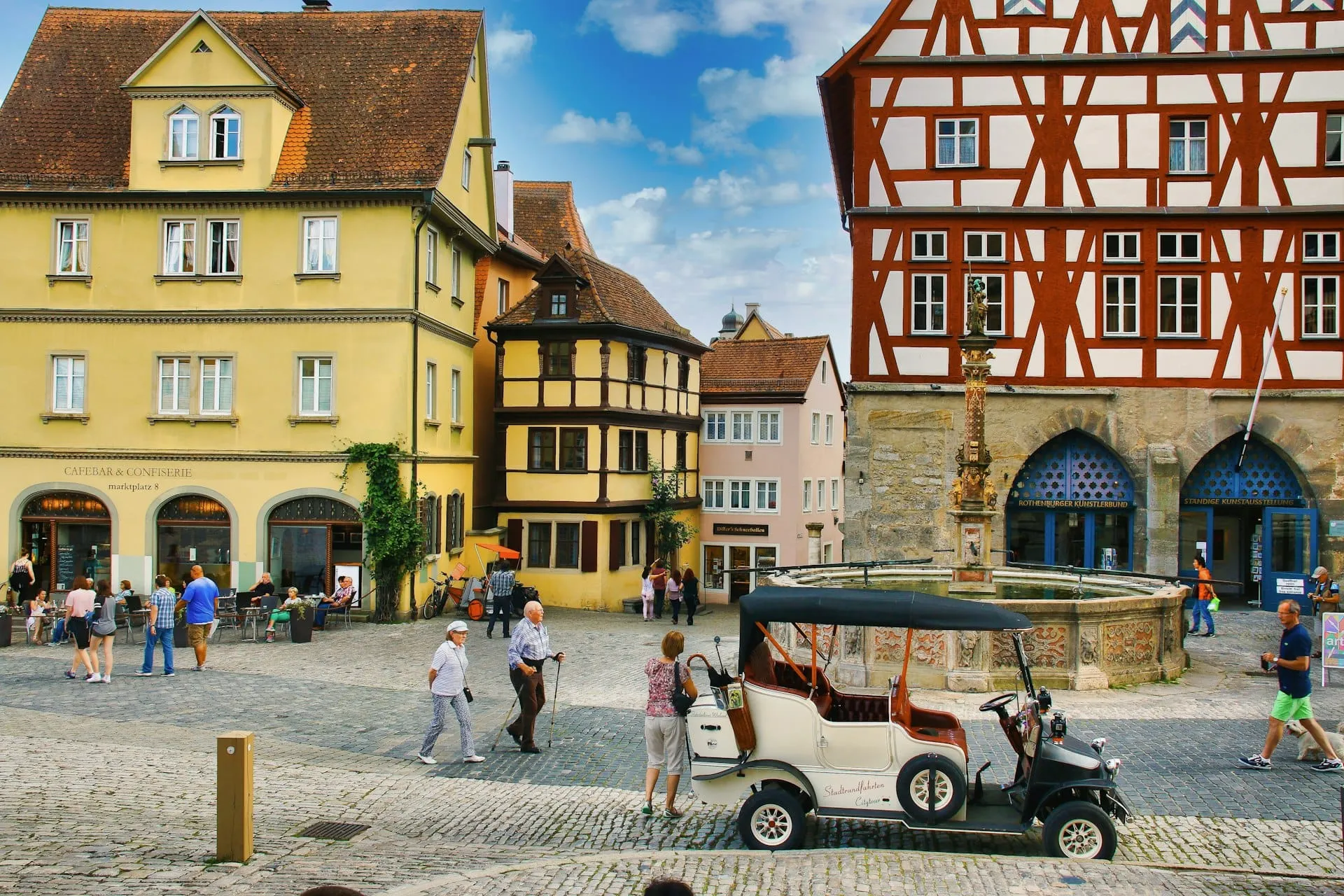
Short answer: yes, you can still drive into most European cities. The catch is that the rules change at the city line, and they change again at the next border. A low-emission zone is a marked area where your vehicle has to meet a minimum emissions standard, proven either by a sticker on the windscreen or by a camera reading your plate. Get the paperwork wrong and the fine turns up weeks later, often forwarded by the rental company with an admin fee stapled on top.
There is no single European sticker, which is the part that trips people up. France runs Crit'Air, Germany runs the Umweltplakette, Italy layers newer low-emission zones on top of its old limited-traffic zones, and Belgium and the Netherlands use camera-only systems with no sticker at all. Jonas keeps a plastic wallet of these things in the door pocket of the van, one per country, because none of them talk to each other.
How the stickers work, country by country
In France the sticker is the Crit'Air, officially the certificat qualite de l'air. Order it from certificat-air.gouv.fr and nowhere else. That is the only official site, and there is a small industry of copycat pages charging four times the price for the same thing. There are six classes, numbered 0 to 5 by Euro standard and colour-coded, and the sticker goes bottom-right on the inside of the windscreen. It is valid for the life of the vehicle, so you buy it once. Foreign plates need it too, and the order form runs in English and German.
In Germany you want the green Umweltplakette. There used to be red and yellow versions as well, but only green gets you into a zone now. You can buy it at TUV or DEKRA testing stations, at many garages and registration offices, or online before you travel. One detail Jonas likes: you only need it once you actually enter a marked Umweltzone. Passing through on the motorway does not count, even if the road runs straight through the city.
Italy is the muddle. Two different things overlap. The ZTL (zona a traffico limitato) is a historic-centre access restriction that has nothing to do with emissions and everything to do with permits, and it exists in hundreds of towns. Then there are newer low-emission zones, like Milan's Area B, plus Milan's Area C, which is really a congestion charge. There is no national sticker. Cameras read your plate and match it against a database, so with a foreign car you often cannot tell you did anything wrong until the letter arrives.
Stickers and charges: what to budget and where to check
- France Crit'Air, only official site
- certificat-air.gouv.fr
- Crit'Air price (to a French address)
- about EUR 3.85 including postage; confirm current price
- Crit'Air fine
- flat rate from EUR 68, up to EUR 450
- Germany green Umweltplakette
- one-off, bought at TUV/DEKRA/online; valid for life of vehicle
- Germany Umweltzone fine (no valid sticker)
- around EUR 100; confirm current figure
- Milan Area C daily charge
- EUR 7.50 standard ticket
- Milan Area C and Area B hours
- Mon-Fri 07:30-19:30, excluding public holidays; free at weekends
Paris, Milan and what changes at the city line
To drive into Paris you need a Crit'Air. The zone covers the area inside the A86 ring road and runs Monday to Friday, 8am to 8pm, minus public holidays. The oldest classes are banned and the threshold has been tightening year on year. One honest wrinkle: in May 2025 the French parliament voted to scrap the low-emission-zone scheme, but that has not become law and may not, so for now nothing has changed. Keep the sticker. If the national rule ever goes, individual cities can keep their zones by local decree anyway.
Milan runs two zones at once, which is why people get caught. Area C is the congestion charge over the historic centre inside the Cerchia dei Bastioni: EUR 7.50 a day, cameras at the gates, Monday to Friday 07:30 to 19:30. Area B is the low-emission zone that covers almost the whole city, no charge, but it bans the more polluting vehicles on the same weekday hours. Weekends and holidays both zones are open. So to drive into central Milan on a Tuesday you might be paying the Area C charge and needing to clear the Area B emissions rule in the same trip.
Our own habit for both cities is boring and it works: we park on the edge and take the metro. Milan's is quick and cheap, and Paris driving inside the ring is not a pleasure anyway. If you are staying inside a zone, check whether your accommodation can register your plate for access, because a hotel inside a ZTL usually can.
Check one database before you drive
The single most useful page for all of this is urbanaccessregulations.eu, the EU-backed database of urban access rules. It lists zones city by city, tells you which vehicles are affected, whether you need a sticker or online registration, and has a map and a route planner. We open it before every new city, because rules shift and a guide written last year is not a legal document. Use it to confirm the current figure and the exact zone boundary, then buy the sticker from the country's own official site.

Sources & further reading
We check the facts in this guide against official sources and note when we last updated it.
Questions we get asked
Do I need a Crit'Air sticker if my car has foreign plates?
Yes. The requirement applies to every vehicle entering a French low-emission zone, foreign-registered or not. Order it from certificat-air.gouv.fr, the only official site, and allow time for postal delivery abroad. The emailed confirmation is proof your vehicle is registered while you wait for the physical sticker.
Can I buy a sticker at the border or on arrival?
In Germany, yes: green Umweltplakette stickers are sold at TUV and DEKRA stations, many garages and registration offices. In France, no. You cannot buy a Crit'Air over the counter, so order it online before you leave. Italy has no national sticker at all; its zones are camera-enforced against your plate.
What about electric cars, are they exempt?
Electric and hydrogen vehicles fall into the cleanest class and are usually allowed everywhere, and in some places get free or reduced access, such as Milan's Area C. Even so, you often still need the relevant sticker or online registration to prove it, so treat an EV like any other car and check the specific city's rule first.
Keep reading
Practical
Road-tripping Europe in an EV: charging, apps and range reality
We crossed four countries in an electric car and lived on public chargers the whole way. Here is what actually works: the one plug that matters, the card that saves you money, and how far you really get between stops.
Practical
Tolls and vignettes in Europe, country by country
Which countries make you buy a sticker, which charge by the kilometre, and how we avoid paying twice - the paid-road map we wish we'd had on our first trip.
Practical
Driving in Europe in 2026: the checklist we run before every trip
Documents, mandatory equipment, vignettes, tolls and low-emission zones - the practical basics that keep a European road trip fine-free, in one place.